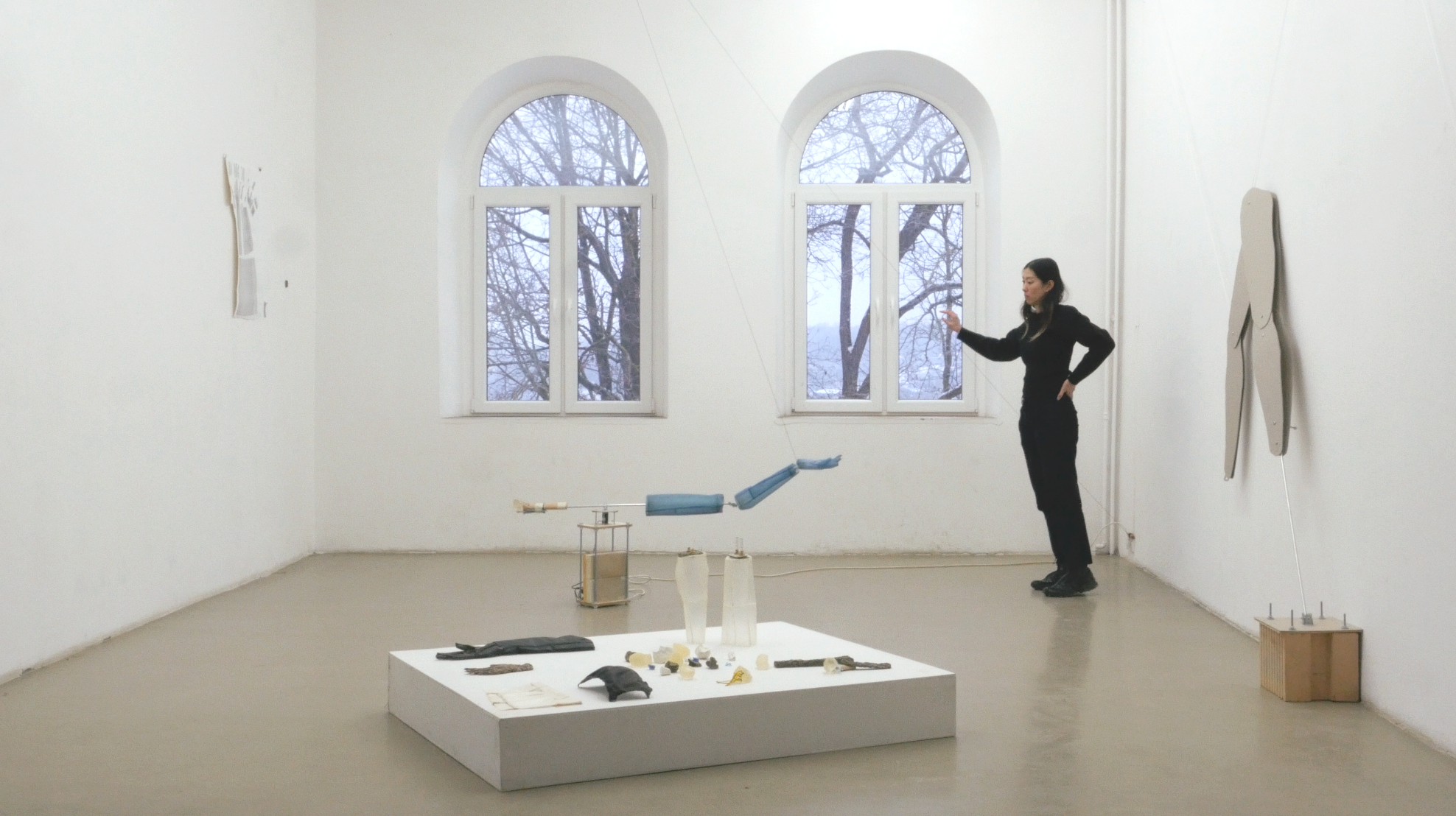



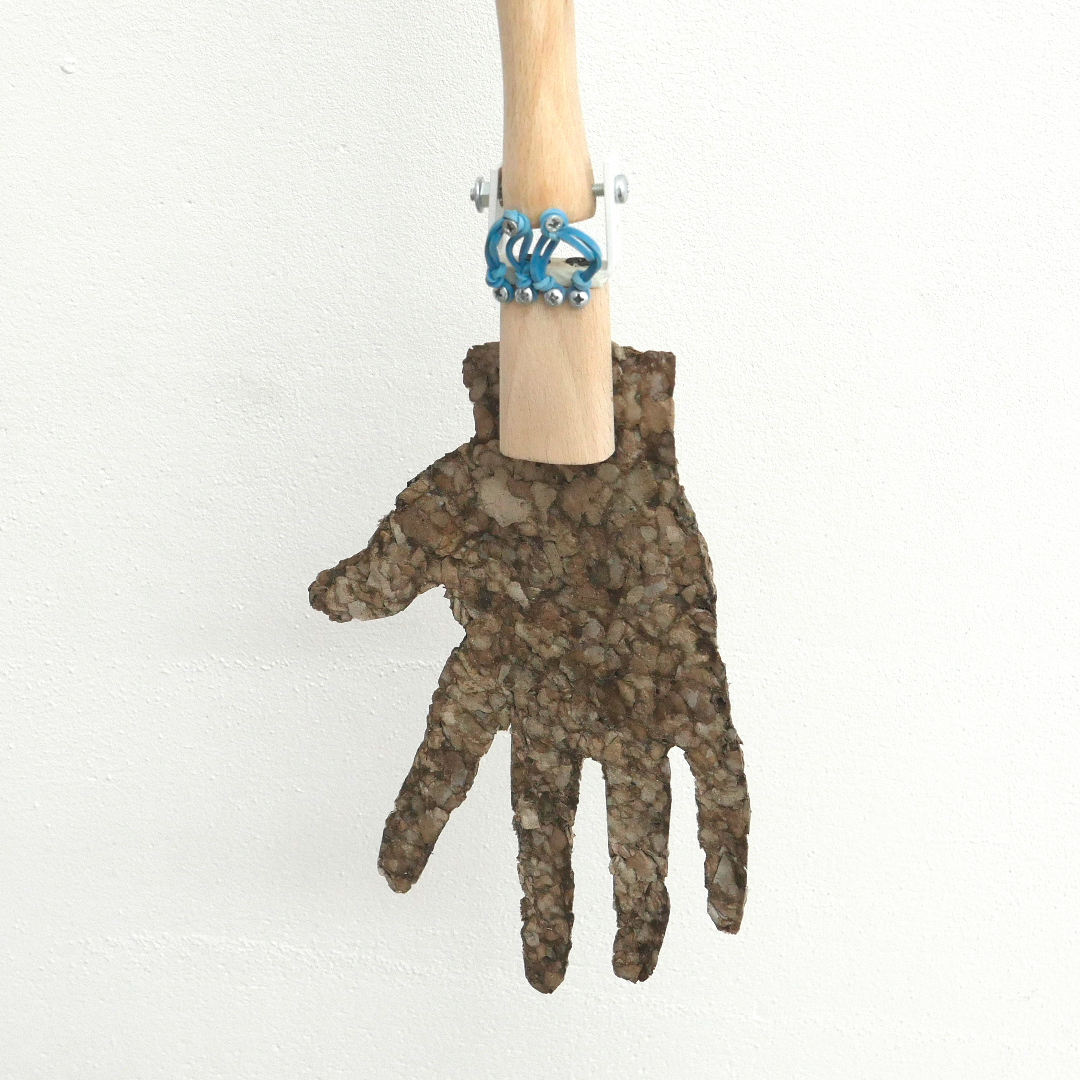
kinetic installation 2026
sound 2025

interactive installation 2025
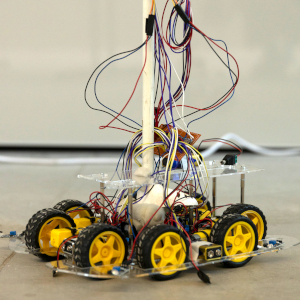
objects 2025
interactive art 2024
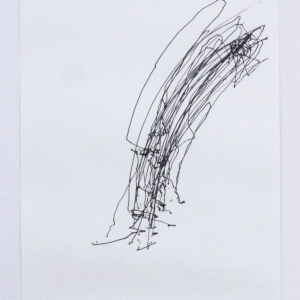
interactive art 2024
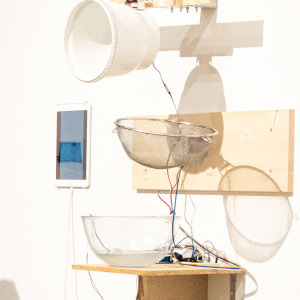
objects 2023
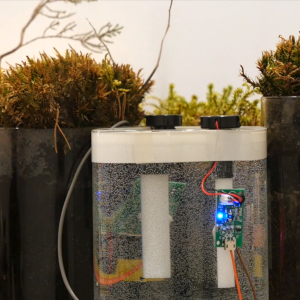
objects 2023

objects 2022

video 2022

painting 2022

video & performance collaboration project 2021

objects 2020

video project 2019

video project 2019
Yuko Kinouchi is a visual artist working between Tallinn and Tokyo, whose practice weaves together low-tech mechanical systems, video, painting, and installation. Through these mediums, she constructs fictional frameworks and quasi-documentary situations that emerge from her ongoing sociological and environmental research. Often engaging with posthuman theory, she investigates the boundaries between the human and the non-human—most recently focusing on zombies as speculative figures that challenge conventional understandings of life, agency, and materiality.
Her works frequently incorporate playful yet precise mechanical movements, creating an aesthetic that balances fragility, humour, and conceptual rigor. By reconfiguring everyday objects, inherited commodities, and natural materials, Kinouchi proposes alternative ways of sensing and narrating the world around us.
Education | |
|---|---|
2023 - 2025 |
MA Contemporary Art, the Estonian Academy of Arts, Estonia |
2010 - 2013 |
Yotsuya Art Studium (Prof. Kenjiro Okazaki), Japan |
2006 - 2008 |
MFA Tama Art University, Japan |
2002 - 2006 |
BFA Tama Art University, Japan |
Exhibition (selected) | |
2026 |
"Athletic Body and Zombie" SODAS2123 project space, Vilnius, Lithuania |
2021 |
"Tamabi DNA :A Genealogy of Comtemporary Nihonga Japanese Painting since 1965" Tama Art University Art-Theque Gallery, Tokyo, Japan |
2019 |
"Alternating / Direct Current" KulttuuriKauppila Art Centre, Ii, Finland |
2019 |
"Join with Nature" Art House Nahkuri, Kärsämäki, Finland |
2019 |
"Between" Koganecho area management center, Yokohama |
2017 |
Nakanojo Biennale 2017 Nakanojo, Gunnma |
2016 |
Minato Media Museum 2016 Nakaminato, Ibaragi |
2014 |
SICF15 Spiral, Tokyo |
2013 |
“I was you, you will be me” akibatamabi21, Tokyo |
2012 |
“the branch cut” Gallery Objective Correlative, Tokyo |
Screening (selected) | |
2016 |
Movies-High 16 K’s cinema, Tokyo |
2015 |
Tamabi Eizo Festival in Akibatamabi 21 akibatamabi 21, Tokyo |
Artist in Residence | |
2026 |
SODAS2123 residency in Vilnius, Lithuania |
2025 |
KORDON residency in Hiiumaa, Estonia |
2019 |
KulttuuriKauppila AiR in Ii, Finland |
2019 |
Air Frosterus in Kärsämäki, Finland |
2019 |
Koganecho Artist in Residence in Yokohama, Japan |
2017 |
Kunstnarhuset Messen International Artist Residency in Ålvik, Norway |
2015 |
NCCA (National Center for Contemporary Arts) Artist in Residence St Petersburg, Russia |
2015 |
The Tartu Artist in Residence in Tartu, Estonia |
2014 |
The D’CLINIC studios Lendava, Slovenia |
Award, Scholarship | |
2014 |
Humio Nanjo Judges’ Prize SICF15 Spiral, Tokyo |
2006 - 2007 |
Sato International Cultural Scholarship Foundation |
2006年 |
多摩美術大学卒業 |
|---|---|
2008年 |
多摩美術大学大学院修了 |
2010 - 2013年 |
四谷アート・ステュディウム在籍 |
2025年 |
エストニア芸術アカデミー大学院修了 |
2017年 |
中之条ビエンナーレ2017 参加 |
2016年 |
みなとメディアミュージアム2016 参加 |
2016年 |
Movies-High 16 (K’s cinema)にて作品上映 |
2015年 |
多摩美映像フェスティバルin Akibatamabi21 にて作品上映 |
2014年 |
SICF15(Spiral Independent Creators Festival 15)南條史生賞受賞 |
ほか、フィンランド、横浜、ノルウェー・ロシア・エストニア・スロヴェニアにてアーティスト・イン・レジデンスに参加。
I create low-tech mechanical art, videos, and installations.
My practice draws inspiration from non-human beings, fictitious elements, and the environment, including nature and cyberspace. My artwork comprises 3D-printed objects that move with robotics, interactive/non-interactive static and moving images. I develop them into fictitious narratives, experimental actions, and tools for learning about non-humans.
In my art practice, I explore the relationship between mediums/materials and information. I draw from N. Katherine Hayles's and Rosi Braidotti's posthuman theories, focusing on embodiment. In their theory, embodiment refers to the human body’s transmutation by technology. I apply this idea to mediums/materials as bodies, and I inscribe information on them to make them kinetic. Here, the embodiment process means sending signals (intangible information) to animate the objects.
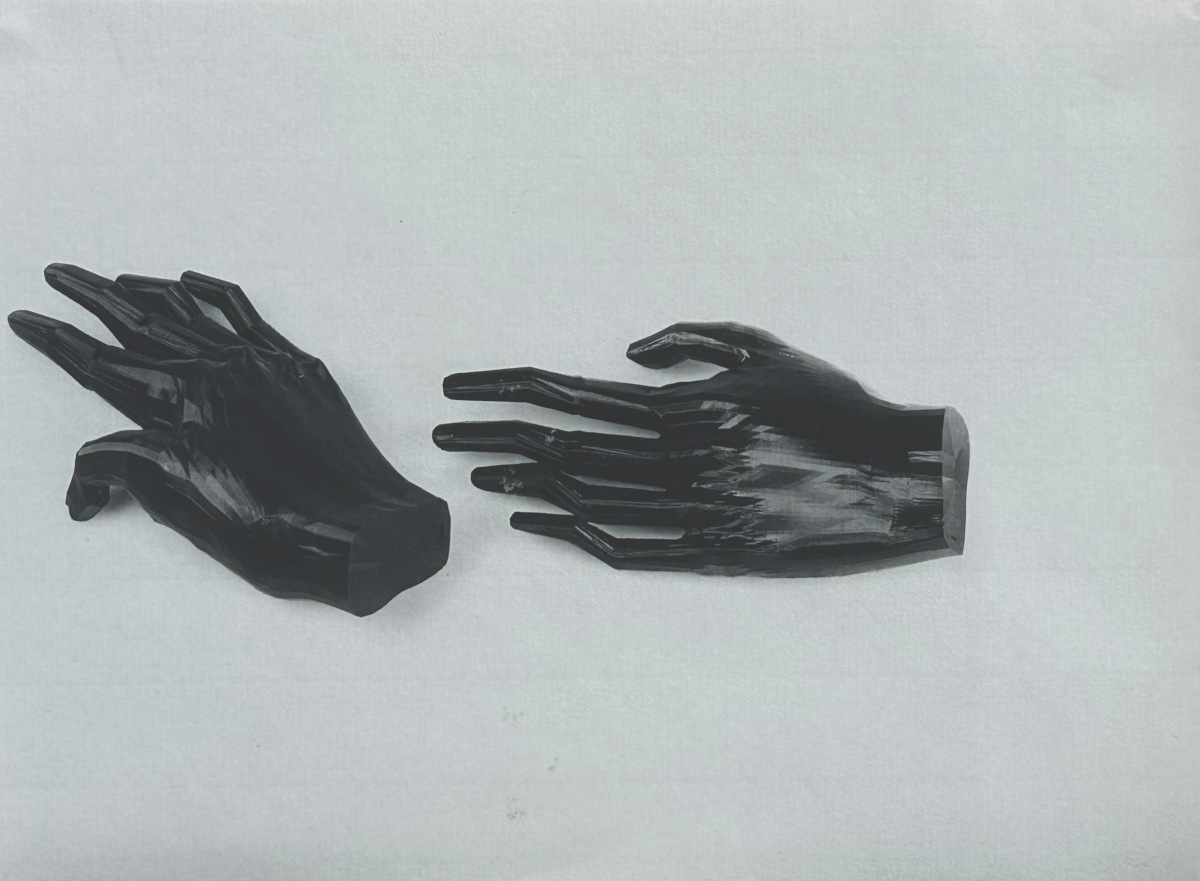
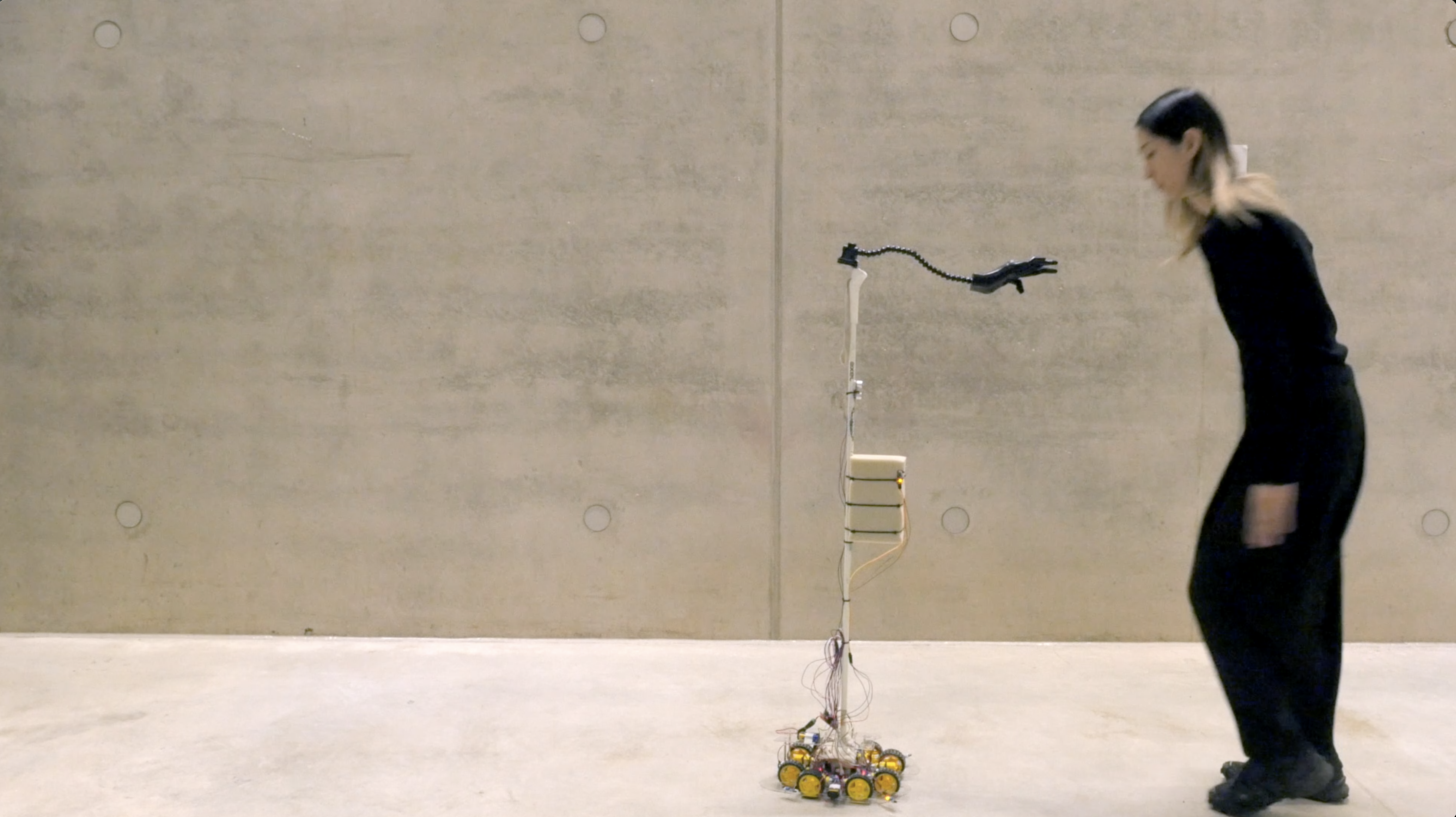
For me, art pieces are the medium for thinking about how we can interact with non-human existences. For example, in 2024, I created a robot car that carries a 3D-printed hand likened to a zombie. Sensors enable it to drive in a way that respond to its environment. When the distance sensor detects human movement, the robot car acts like a zombie (non-human, or posthuman). This robot car’s behavior happens because of the embodiment. Also, I can be a posthuman while interacting with this robot car.
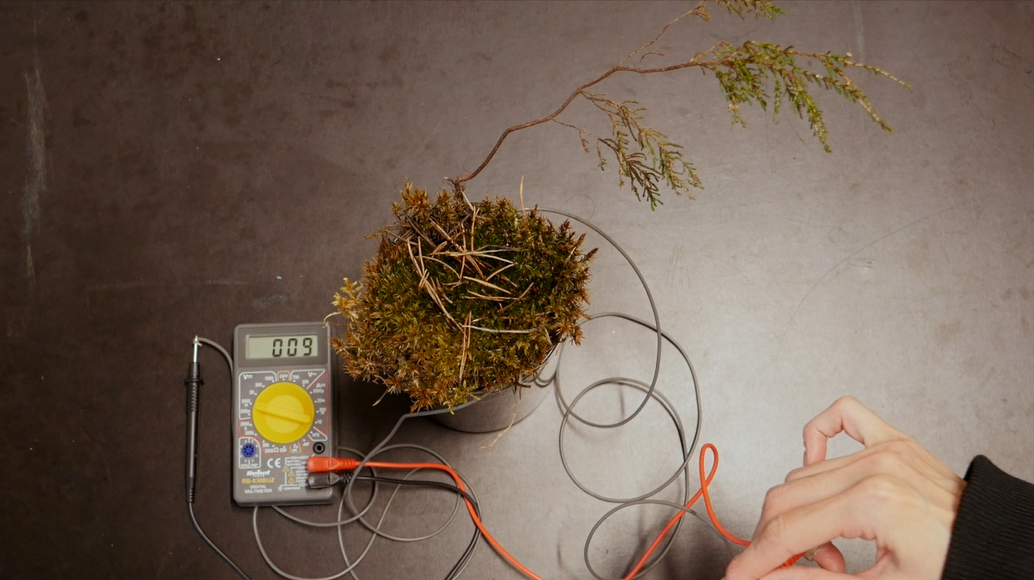
This practice connects to my other interest: non-human-based practices, especially with nature. I have lived in the city for a long time and have questioned consumerism, environmental issues, and human-centered society. In my non-human-based practice, nature is embodied in my art pieces. Sometimes, I act as a non-human creature inspired by the natural environment, and sometimes, I bring plants into my installation or use environmental data input to move objects. I aim to blur the boundary between humans and non-humans, and make humans integrate into nature.
日常生活の中でたびたび起こりうる認識齟齬や勘違いについて興味がある。何らかの認識が成り立つための前提条件を変数として、その値によりどのようなアプトプットが行われるかの実験を行なっている。
具体的には意味の置き換えを軸に、主に映像や身体行為、オブジェクト、絵画の制作を使用し、例えば日常の行為を異なるバックグラウンドに置き換えることで文脈をずらして社会の中で意味を持つ行為か否かを試したり、電気や塩など日常的な科学・化学の非日常的な使用方法によるものの変化に焦点をあてる実験を行う。
また同時に、ものや事象について観察して構造を抽出し、フィクションとして組み換えたり、パフォーマンスを加えるなど小さな変化を与えることにより、私たちを取り巻く環境がどう私たちの生活に影響するかを考察する。
email: yuko.kinouchi at gmail.com